Why storm damage happens in Ripon
Main Street is Ripon's brick core, and a storm reaches it through old roofs and street-level glass. The first brick buildings there were the Riddle Building of 1884 and the Odd Fellows building of 1886, followed by the Bank of Ripon at Main and Stockton in 1910 and the Markham Hotel in 1912. The General Plan notes that the older a structure is, the less likely it is to resist an earthquake, and singles out brick walls bound with sand lime mortar, so any storm-cracked brick is kept clear of people and photographed before work goes near it.
South of Main Street, a storm meets Ripon's bungalow streets of 1910 to 1920. Bungalows, with a few Mission and Classical Revival cottages among them, line Stockton Avenue and the tree-named streets from Walnut to Acacia, and near the old depot north of Main the Queen Anne and Italianate cottages are older still. When the City surveyed a slice of its older areas for redevelopment in 2009, 374 of 644 parcels showed dilapidation or deterioration. Wind finds worn roofing and loose trim first, and rain follows through the opening.
At the Jack Tone Road interchange, a storm hits motels, travel plazas and fast-food restaurants beside a freeway carrying 139,000 vehicles a day. The General Plan describes the interchange as designed to serve large volumes of traffic, especially trucks, and in 2015 two large trucking service and parking facilities stood near it. Lobby or restaurant glass broken overnight leaves a building open, so board-up there is a security task as much as a weather one; the Department of Insurance guide names plywood among the temporary repairs.
North Pointe puts almond orchards next to food plants, truck yards and a light-industrial park. The 2015 specific plan found all of those on its 310 acres, with highway commercial besides, and in 2016 about 320 of Ripon's roughly 450 undeveloped acres were still farmland or orchard. Where orchard trees stand near buildings, a limb or a whole tree on a roof comes off under a qualified tree worker, and a roll-up door or wide roof opened by wind on the industrial side is secured before the crew leaves.
Ripon's flood ordinance counts damage from any cause, storms included. Under the City's Flood Damage Prevention chapter, a building is substantially damaged when putting it back would cost at least half of what it was worth beforehand, whatever caused the harm. For buildings in the FEMA zone along the Stanislaus, the only 100-year zone in the city, a heavy storm loss can reach that line. The City's own figures put some 85 percent of its rain between October and March.
According to a Manteca Bulletin report of 5 October 2018, 2½ inches of rain fell on Ripon in two hours. Manhole covers were forced up, at least three of them on Doak Boulevard, and water spread over lawns and into garages.
Storm damage repair, as delivered in Ripon
From the Modesto base it is 11 road miles, north over the Stanislaus on SR 99. Inside Ripon three overpasses, at Main, Fulton and Jack Tone, link the two halves of town the freeway divides.
The drive depends on a single bridge: the General Plan calls SR 99 the city's only direct way south over the river and warns an emergency can close it. December and January fog or harvest trucks push arrival toward 120 minutes; the time is confirmed on acknowledgement.
First the crew clears people from beneath anything loose overhead, whether a split limb, a hanging gutter or cracked brick, because broken limbs move and trees under tension react when cut. Any line on the tree or building halts the job until the utility clears it.
Each roof face, wall, room and damaged item is photographed and filmed before it is touched, and every call with the insurer is noted in the log.
The site runs under a qualified tree worker, and whether it is a street, yard or orchard tree is recorded before cutting.
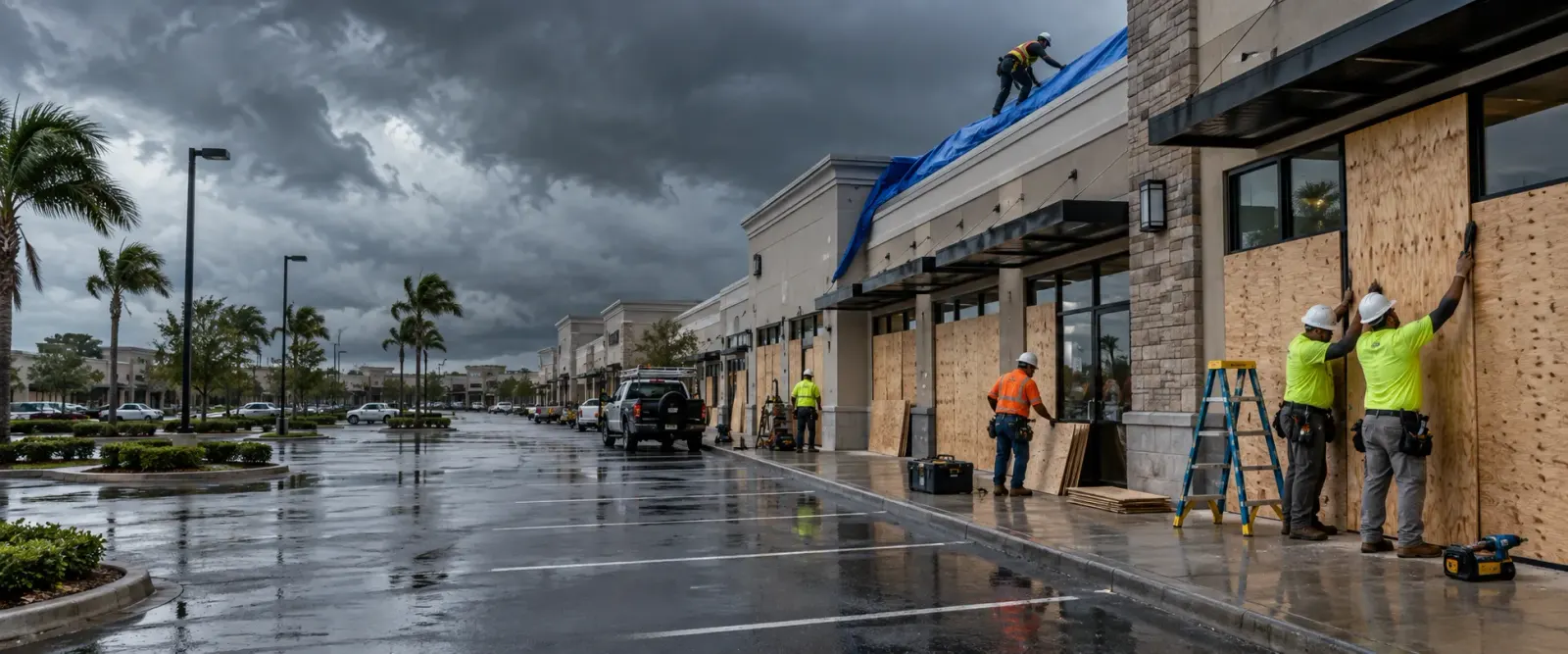
Plywood seals broken glass and doorways; tarps go over torn roofs, anchored against the next gust. Roof work follows Title 8 fall protection: section 1730 over 20 feet, section 1731 over 6 feet on residential-type roofs.
Wet ceilings, insulation or floors go to water damage restoration in Ripon.
The permanent repair is scoped for the adjuster. The City Building Department permits it, checking homes and light commercial plans itself and sending heavy commercial and industrial plans out.
Where storm damage happens in Ripon
Ripon's storm damage runs from 1880s brick on Main Street and old bungalow streets to freeway motels, food plants and 2000s tracts.
Downtown Main Street
The historic core where Ripon's first brick went up, from the Riddle Building of 1884 to the Markham Hotel of 1912. Street-level glass is boarded after a storm, and cracked brick is kept clear of people until it is assessed.
Bungalow streets south of Main and the depot area
Blocks of 1910 to 1920 houses south of Main, from Stockton Avenue across to Acacia, and the older cottages north of Main by the depot. Aged roofing and trim lift in wind and are tarped.
South Stockton Avenue industrial district
The core of Ripon's industry, with the Diamond Pet Foods plant at 942 S. Stockton Avenue since 2013, between SR 99 and the river. Wide roofs and large doors are secured and photographed before other work starts.
Former paper mill by the Stanislaus River
The Simpson Lee mill of 1965, later Fox River and Neenah, closed in 2009 after years of making about 35,000 tons of paper annually. Where an old industrial building stands with few people about, a storm opening is secured on the first visit.
Stanislaus River corridor and the Vera district
The city's only FEMA 100-year zone, with treatment ponds behind levees and some 630 acres of Resource Reserve. A heavy storm loss here can meet the 50 percent substantial damage test, so floodplain rules shape the repair.
Jack Tone Road and the SR 99 highway service corridor
Motels, fast food and truck-oriented travel plazas crowd the interchange. Broken lobby glass is boarded for security, guests are kept clear, and each business's damage is logged on its own.
North Pointe Specific Plan area
Orchards, processing plants and truck yards on the 310-acre plan area bounded by Fulton Avenue and Jack Tone Road. Orchard trees near buildings and wide industrial roofs are the storm exposures to check.
Ripona Planning District
A 146-acre planning district whose land below Milgeo Road is fully built. Each roof or window that wind opens there is photographed before cover goes on.
Wilma Avenue and the North Wilma district
City Hall at 259 N. Wilma, a high school site of 53 acres and an elementary site, and homes on Wilma where 2018 storm water reached front doors. School and civic roofs are tarped with fastened edges.
Doak Boulevard and the southern edge
The southern route, with a planted median through the homes and turn lanes through the industrial districts, where manholes were forced up in 2018. Industrial frontages near Stockton Street take wind on wide roofs.
West Main Street and South Jack Tone district
Low-density homes and commercial recreation land toward the river, with apartments on West Main such as Bethany Home's 94 senior units. Openings in multi-unit buildings are boarded and logged unit by unit.
2000s subdivisions
The 1,577 homes of Ripon's busiest decade, among them Chesapeake Landing, Brookline Estates and Seven Oaks. Fences, gutters and fascia go first in wind, and each lot's damage is photographed separately.
Storm damage sub-services available in Ripon
Questions from Ripon property owners and managers
The General Plan warns that the SR 99 bridge, Ripon's only direct route south over the Stanislaus, can be closed by emergencies. If it is shut, the crew takes a longer way round and arrival moves later; Propertyvendr passes on the revised time as soon as it is known. Meanwhile keep people out from under any damage and, where it is safe, move valuables away from the opening.
It can. The City's flood chapter does not ask what caused the damage, only whether restoring the building would cost half or more of its pre-damage market value. A big wind or tree loss on a floodplain building can cross that line, and it is Ripon's planning director who decides floodplain development permits. Temporary tarps and plywood come first; the repair scope then shows where the cost stands.
The ground beside and below the wall is closed off, and the crack is photographed before anyone works near it. Ripon's General Plan notes that older buildings resist earthquakes less well, and singles out brick walls bound with sand lime mortar, so damaged brick is assessed before anything leans on it. Openings are boarded and the roof tarped, and the permanent repair is scoped for the adjuster.
Permits and inspections sit with Ripon's Building Department, which takes applications through its online Permit Center. It reviews house and light commercial plans with its own staff, but an industrial or heavy commercial plan goes to an outside professional plan checker. Until the permit is issued, openings stay boarded and roofs tarped, the commercial roof repair scoped in the meantime, and the photos and receipts stay on file for the adjuster.
Temporary cover need not wait. The Department of Insurance guide tells policyholders to make temporary repairs to prevent further damage and warns that ensuing damage may not be covered where reasonable steps were not taken. If a full inspection is not possible at first, the adjuster may scope the loss briefly and return. FEMA suggests talking to the adjuster before signing any cleaning, remediation or maintenance agreement.
No; they are separate services. Storm damage repair secures the building: the hazard zone, the tree lifted off, tarps and plywood, and the photo record for the claim. Clearing limbs, branches and broken material from the property afterward is the debris haul, and drying a wet interior is water damage restoration. A single Ripon request can open all three.
Storm damage repair near Ripon

