Why storm damage happens in Ceres
Ceres takes nearly all of its wind and rain in five months, and the heaviest arrives in bursts. Of the 12.27 inches a normal year leaves at the Modesto airport station, 9.85 fall from November through March. When the storm run began in late December 2022, that station set daily records of 1.57 inches on 27 December and 1.37 inches on 31 December, as the NOAA California Nevada River Forecast Center lists them. A roof opened by the first storm of a run takes water from every storm that follows until it is covered.
Downtown Ceres puts its oldest canopy and its power lines over the same blocks. The Downtown Specific Plan finds mature street trees most prominent on Fifth and Ninth streets and on parts of North, Fourth and Sixth, and records electricity reaching downtown on overhead Turlock Irrigation District lines. A limb that breaks there can land on a roof and a service line together, and Title 8 section 3423 bars tree trimming within 10 feet of high-voltage lines by anyone not qualified for line clearance.
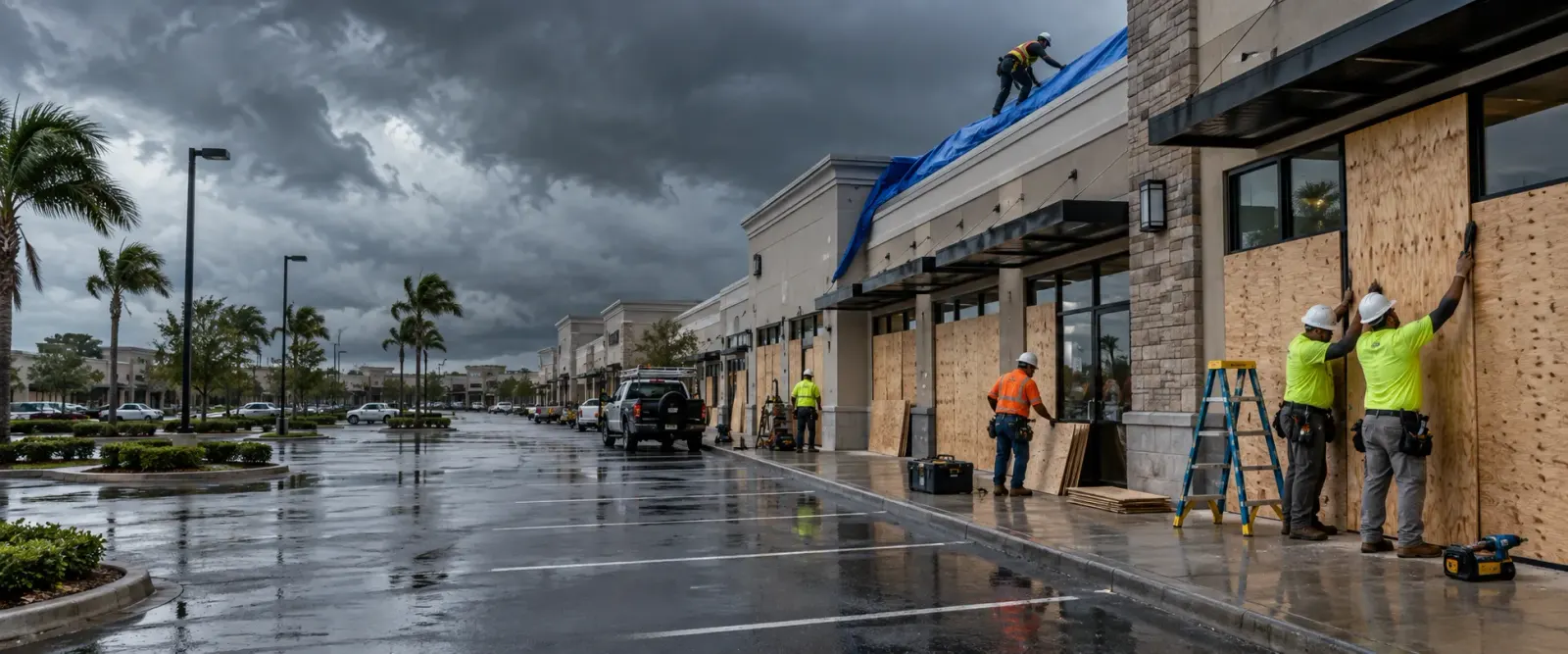
On Fourth Street, a storm that breaks a front window leaves a shop open to the street overnight. The southern blocks are mostly one-story commercial buildings, a few of two, built right up to the sidewalk, including the IOOF building on the corner of Lawrence. On a street-front shop, the plywood keeps people out as well as rain. Plywood across the gap is also what the California Department of Insurance claims guide means by a temporary repair, and it warns that ensuing damage may go unpaid if reasonable steps were skipped.
Where homes sit close together or share a roof, one falling limb reaches several households. Ceres counts 467 mobile homes, 4 percent of its 13,313 units, in parks that include Ceres West Mobile Home Park, Lazy Wheels and Ceres Mobile Estates, and multifamily buildings hold another 13 percent. Every opening touched in a strike like that is boarded or tarped and logged by unit, so each owner, the board and each adjuster read the same record.
The big flat roofs on the Highway 99 side can peel back from a single loose edge. The Walmart building proposed for Mitchell Ranch Center in 2010 measured about 191,430 sq ft, and the parcels of Census Tract 25.04 west of the freeway carry General and Light Industrial zoning. When wind gets under a lifted perimeter or seam on a low-slope roof, the membrane rolls back and rain drops straight into the ceilings of the space beneath. A tarp on that kind of roof is fastened or weighted against the next gust, never simply draped.
On 28 December 2022 the City of Ceres opened self-serve sandbags at its Corporation Yard on Harold and Pine streets, and on 14 January 2023 the President approved disaster declaration FEMA-4683-DR for the winter storms. Damage spread across a storm series is photographed as each storm passes.
Storm damage repair, as delivered in Ceres
Ceres is 4 road miles from the Modesto base, reached down Highway 99 to the Mitchell Road or Whitmore Avenue interchange. Every visit adds to one make-safe log: hazard zone, utility call, openings boarded, roof tarped, photos.
The crew leaves Highway 99 at Whitmore Avenue or Mitchell Road, where Caltrans counts 117,500 and 121,000 vehicles a day just beyond each interchange. December and January tule fog and harvest-season trucks can hold arrival near the 90-minute mark. Propertyvendr gives a time when the request is acknowledged and asks whether anything touches a power line.
Everyone is kept out from under hanging limbs, which can keep moving, and clear of any line in contact with the tree or the building. A trunk under tension can react unexpectedly when cut, so no saw starts near a line until the utility is called.
Damage is photographed and filmed inside and out before any limb, broken pane or ceiling tile is moved, and each call about the claim is logged.
A qualified tree worker directs removal under Title 8 section 3421, whether the limb came from the Fifth or Ninth Street canopy or a backyard tree.
Plywood closes broken glass, doors and wall openings. Roofs are tarped under Title 8 fall protection, section 1731 above 6 feet on a house and section 1730 above 20 feet on a larger roof, with a low-slope tarp fastened or weighted down.
Rain that got past the roof into Ceres ceilings or floors is handed to water damage restoration on the day it is found.
The permanent repair is scoped for the adjuster with receipts kept, and permitted by the City of Ceres Building Division at 2220 Magnolia Street. Permanent roof work goes to commercial roofing.
Where storm damage happens in Ceres
Storm damage in Ceres depends on what stands over or around the roof: old street trees, overhead lines, wide retail spans, shared walls or open fields.
Downtown and Fourth Street
One-story shops, a few two-story, built up to the sidewalk, with power arriving on overhead TID lines. A broken front window is boarded the same night, and a limb across a service line waits for the utility.
Fifth Street historic homes
The 1870 Whitmore home, the Whitmore Mansion and houses from about 1900, under the most prominent mature street trees downtown. The largest limbs hang over the oldest roofs, so one break can hole a roof more than a century old.
Mitchell Road corridor
About 450 acres along 2.5 miles of Mitchell Road, planned since 1995 for homes at up to 25 units an acre, mobile homes and condominium groups. Where units share a roof or carport, one limb strike means several openings to board and log.
Mitchell Ranch Center, Mitchell and Service roads
Proposed in 2010 as 299,830 sq ft of retail on 26.4 acres. On a low-slope roof of that span, wind that lifts one edge can peel membrane back over the sales floor.
West Landing
960 acres, about 660 of them farmland awaiting conversion, beside industrial and County facility sites east of Crows Landing Road. Fences, signage and roof edges are the first things wind loosens there, and each is photographed before it is secured.
Eastgate, Hatch Road and Boothe Road
A 370-acre planned community at Hatch and Boothe roads whose 2004 master plan set 4.5 to 12 units an acre. Strong wind on rain-softened soil can uproot landscape trees here, and fences, gutters and fascia give way first.
Whitmore Ranch
Whitmore Avenue bounds these 94 or so mostly residential acres on the north, Moore Road on the west and La Rosa Elementary School on the east. Crews tarping these tract roofs clip into fall protection once they are more than 6 feet up, per section 1731.
Morrow Village
Listed by the City as a disadvantaged neighborhood, with Whitmore Avenue to the south and Mitchell Road to the east. A boarded window or tarped roof stays in place, photographed and logged, until the permanent repair is scoped.
River Road and the Tuolumne bluffs
River Road houses fall in FEMA's 500-year zone, and the ground under the bluffs beside the Tuolumne is subject to flooding in severe events. Where storm water has reached a house as well as wind, the wet side passes to water damage restoration.
South and west Ceres along Highway 99
The City ranks the blocks from Hackett Road and Don Pedro Court to Farris and Central avenues among those needing the most repair. New storm openings are photographed apart from older wear, so the adjuster can tell them apart.
South Modesto/Ceres, Herndon Road to Richland Avenue
The City places the homes between Herndon Road, Richland Avenue, Nadine Avenue and River Road among those needing the most repair, with unincorporated islands close by. On an island parcel, the permitting office is checked before any scope is written.
Mobile home parks
Ceres Mobile Estates, Ceres West and Lazy Wheels hold part of the city's 467 mobile homes. A limb that falls across two neighboring homes is boarded or tarped home by home, each with its own line in the make-safe log.
Storm damage sub-services available in Ceres
Questions from Ceres property owners and managers
Downtown Ceres gets its electricity from the Turlock Irrigation District on overhead lines, so the line is TID's to clear. Keep everyone away from the limb and the line. No cutting starts until the utility has made the line safe, because Title 8 section 3423 keeps anyone not qualified for line clearance from trimming within 10 feet of high-voltage lines. Openings elsewhere on the building can be boarded and tarped while the utility works.
A shop built right up to the sidewalk with its glass gone is open to the street, so board-up is a security step as well as a weather one. State insurance guidance points the same way: the Department of Insurance wants temporary sheeting or plywood in place, and a policy can decline ensuing damage an owner left open. The broken pane and anything inside it reached are photographed before the plywood goes up.
Fifth Street carries the most prominent mature street trees in downtown Ceres, above houses built around 1900. The International Society of Arboriculture lists dead branches, cracks where branches join, decay and roots heaving the soil as warning signs, and warns that a tree standing next to storm damage may be cracked and should be checked. A limb already hanging over the roof is a make-safe call, not something to wait on.
The City of Ceres Building Division, 2220 Magnolia Street, permits work inside city limits, and its pages list commercial, patio and residential permits. The tarp and plywood are temporary make-safe work, and the permanent roof goes to commercial roofing with its scope written for the adjuster first. For a parcel in one of the unincorporated islands inside the Ceres sphere of influence, the permit office is checked before that scope is written.
Yes, for the temporary work. Temporary repairs to stop further damage are what the Department of Insurance guide asks for, and it notes the adjuster may come out before any claim forms. FEMA advises photographing and filming the damage before anything is discarded, keeping receipts for purchases and repairs, and consulting the adjuster or insurer before signing any cleaning, remediation or maintenance agreement. The permanent repair waits for the adjuster's scope.
No. Storm damage repair makes the building safe and closed: the tree off the structure, the openings boarded, the roof tarped and every step photographed. Hauling storm debris away afterwards is the separate storm and fire debris service, and drying a wet interior is water damage restoration. A Ceres request can start all three, each under its own scope.
Storm damage repair near Ceres

