What preventive maintenance program covers, and when a property manager needs it
A preventive maintenance program is the recurring round on a property: roofs and their drains, irrigation, the building systems and the parking lot, looked at in a set order and held against the cycle each item runs on. Its output is a list of findings rather than a repair. Timing decides what the round is worth, because the rain arrives in one band: the 1991 to 2020 normals for the Modesto airport station put November to March at 9.85 of the year's 12.27 inches and leave the months either side dry.
A property manager needs it when a summer of debris sits in a strip center's roof drains and the first storm of the wet season finds them, when an office or medical suite reaches the end of a year with no written record of the annual HVAC inspection an employer has to keep, when a restaurant tenant's hood system falls outside its six-month cycle, when an apartment complex's irrigation runs on into the first frost nights, and when an association's reserve components come round again. All of it is planned here, in any of the 32 cities.
The rounds and the work that follows are carried out by the licensed and insured contractor assigned to the request, identified to the customer at assignment. Every round ends the same way: a dated list of findings, photographs, and a written scope for what needs fixing.
Preventive maintenance sub-services available across the Central Valley
Why preventive maintenance is needed in Central Valley buildings
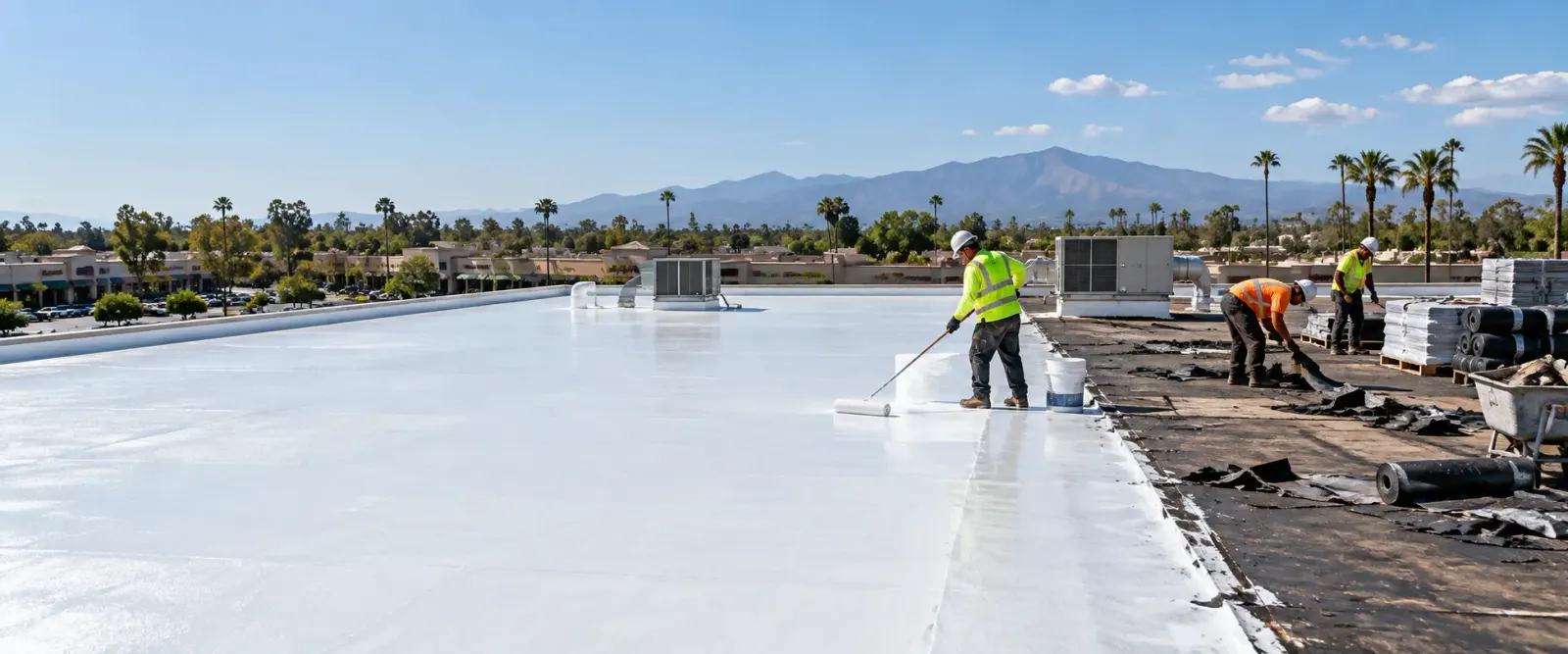
A missed round is only visible once the weather arrives. Seven dry months put debris in roof drains, downspouts and lot inlets, and the wet band then arrives as one stretch from November to March. Windblown debris tends to accumulate and clog drains and downspouts, which causes drainage problems later where it is not removed, and the first storm is what finds whatever was left.
In a workplace the HVAC inspection is a duty on the employer. Cal/OSHA's 8 CCR 5142 reaches any building with mechanically driven ventilation and asks for an annual inspection, correction of what is found and a written record the employer keeps. What usually goes missing is the record of who inspected what and when, rather than the work itself. Offices, retail, warehouses and hotels sit inside the rule.
An irrigation system fails quietly, underground. The EPA's Sprinkler Spruce-Up round is four steps, inspect, connect, direct and select: missing or broken heads, leaks at the joints between sprinklers and piping, pooling that marks an underground leak, and spray landing on hardscape, which runs to the storm drain instead of the landscape. From January 1, 2028 Water Code 10608.14 also stops potable water on nonfunctional turf at commercial, industrial and institutional properties.
An association's plan is anchored to a list it already has. Civil Code 5550 has the board cause a visual inspection of the accessible areas of the major components at least once every three years for the reserve study, and review that study annually, with gas, water and electrical service counted as major components where the association is responsible for them. The common-area turf date, January 1, 2029, sits on the same list.
The program finds the work, and other trades do it. A round produces findings, and each one leaves here: a door, a railing, drywall or an alarm goes to commercial property maintenance, an HVAC fault, a failed backflow test or a panel to plumbing, electrical and HVAC, roof findings to commercial roofing, and pavement findings to asphalt paving and sealcoating. What stays here is the calendar and the record of what was looked at.
How preventive maintenance program is delivered
The request carries the property or portfolio, the building types, the systems on site and who approves work. The ages of the roofs, systems and paving go down with it. Site visit scheduled at a time that suits you. Start date set in the written estimate.
Roofs, drains, irrigation, systems and paving are seen once, and the paperwork is collected: the maintenance labels and manuals left at final inspection, a systems manual where there is one, fire system records on the premises, written HVAC inspection records, and an association's reserve component list.
Each item is written against its cycle: the annual HVAC inspection in a workplace, hood systems every six months, the monthly extinguisher check, the annual backflow test, the three-year reserve inspection.
The calendar is drafted from the rain months and the first frost date: roofs and drains before November, irrigation before frost, paving in the dry months.
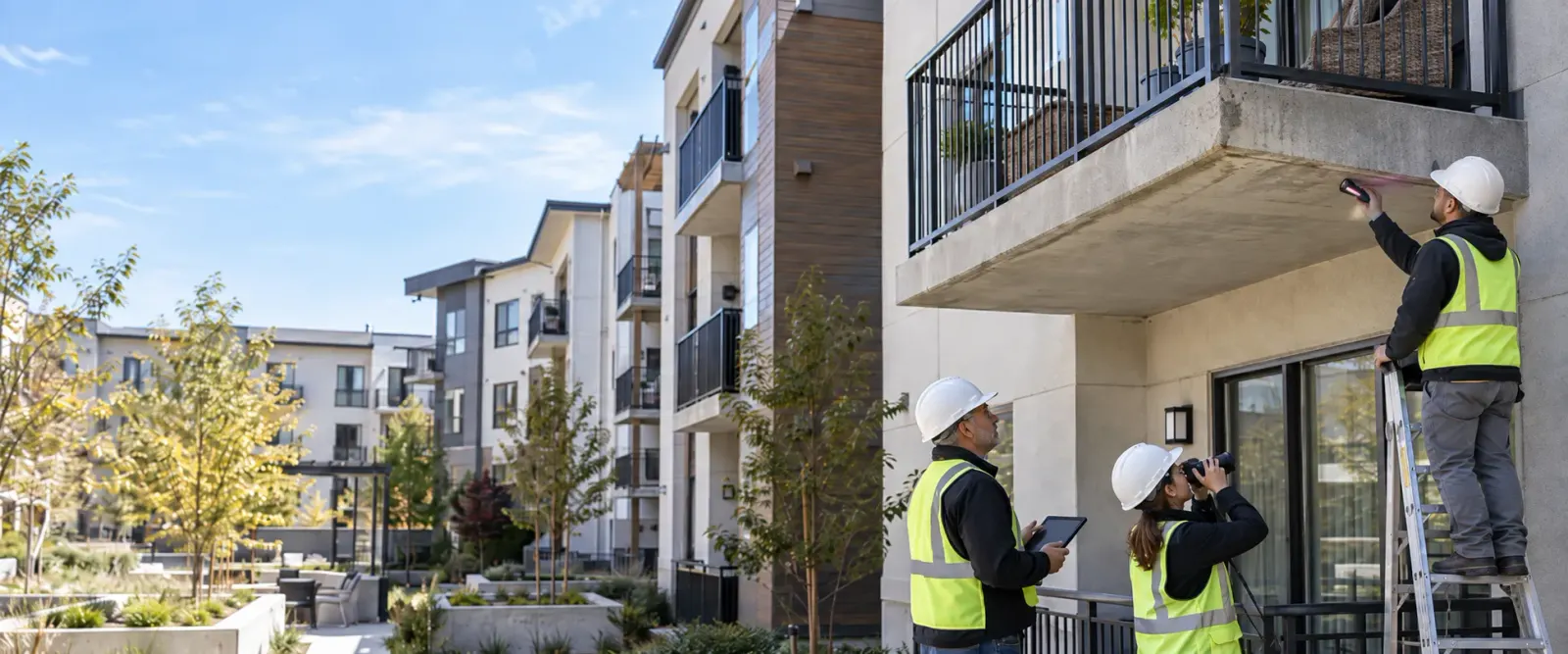
Each round goes to the trade that should be on it: a roofing crew walks the roof, and owners and managers look from ground level. Fire system items are scheduled here and carried out by the trade that performs them.
Every finding leaves with a written line-item scope and goes to the trade that fixes it. A fire system out of service is reported to the fire department at once.
The round closes with its findings written up for the owner or manager: what was looked at, what was found and what was passed on. The statutory records stay where the law puts them, with the owner or the employer, and the next round starts from the same list.
What you receive from the program
An owner, board or manager reads the property from what a round leaves behind, so each round is written up to be read that way.
Preventive maintenance program by city
Each city page names the stock the program applies to there, the water supplier and fire authority whose own requirements go on the calendar, and the sub-services most asked for. Modesto is the hub, with a section on each of its areas.
Preventive maintenance program questions from Central Valley property owners
It is the recurring round rather than the repair: what gets looked at, when it is looked at, and against which cycle. Caltrans describes a pavement preservation program as preventive maintenance, minor rehabilitation and some routine maintenance, which is a fair picture of any program: the planned work, the small corrections and the running items. The output is a list of findings, and each finding goes to the trade that fixes it.
The most common recommendation is two rounds a year, one in spring and one in fall, plus a round after a major weather event. That is advice rather than a requirement, and the guidance it comes from is not written for low-slope commercial roofs on their own. Where a roof gathers vegetation, contaminants or debris, or carries heavy foot traffic, it needs more attention, and existing conditions adjust the schedule.
The duty sits on the employer in a building with mechanically driven ventilation: the system is inspected at least once a year and what turns up is corrected within a reasonable time. It also has to deliver the outdoor air the building code required when the permit was issued, and to run during working hours apart from scheduled maintenance and a few listed cases. Offices, retail, warehouses and hotels sit inside that.
Both run on cycles set in state rules rather than on a service plan. Extinguishers are checked at least monthly and the check is signed and dated where it can be found again. A commercial kitchen hood belongs to the pre-engineered family, which is inspected, tested and maintained at least semi-annually and again immediately after the system has been used. The local fire authority may require more, and those dates sit on the calendar with everything else.
Two dates are set in statute: potable water for irrigating nonfunctional turf is prohibited on commercial, industrial and institutional properties from January 1, 2028, and on the common areas of associations and common interest developments from January 1, 2029. Water needed to keep trees and other perennial plantings alive is not prohibited, and the State Water Board may postpone a deadline by up to three years. Whether a property is covered is a question for its water supplier.
Where the replacement value of the major components is at least half the association's gross budget, the board causes a visual inspection of the accessible areas of those components at least once every three years, and reviews the reserve study each year. Condominium associations also have their exterior elevated elements inspected every nine years, in coordination with that reserve study inspection. The inspections themselves are arranged separately; the plan holds their dates.
The scope sets the price, and the scope is the property: the number of buildings, the roof area and how many drains and scuppers it carries, which systems are on site, the irrigated area and the size of the lot, and the cycles the property is already subject to. Those come back as line items in the written estimate before anything starts.
Related services around the program
Guides on cycles and roofs
Service area from the Modesto base
Typical time from the Modesto base to a property in each city, by road, when a site visit is booked. Fog in December and January and harvest truck traffic on Highway 99 and Highway 132 can add 15 to 30 minutes.
Windows are planning figures from the fulfilling contractor's dispatch records and are confirmed with a time when the request is acknowledged. [CLIENT to confirm]

